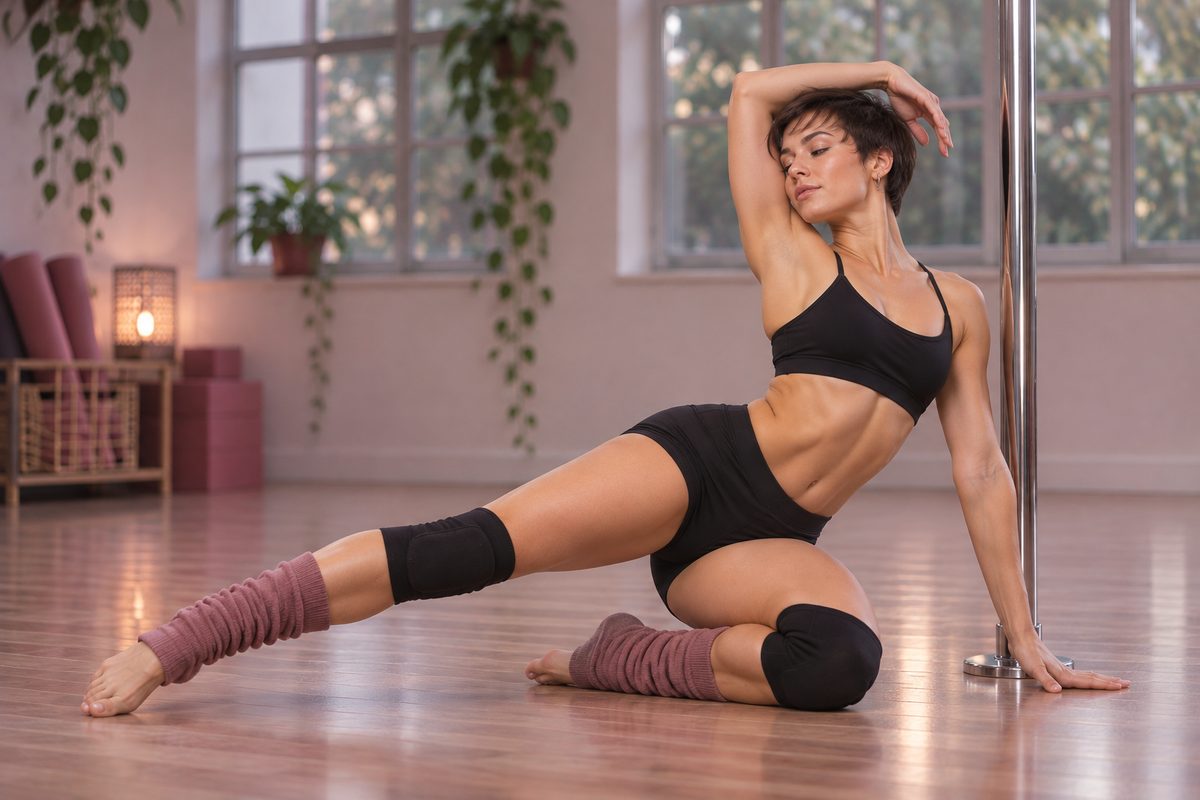

Pole floorwork for beginners is the most underrated corner of pole class. You don’t need to climb or go upside down. You need a smooth floor, a pair of knee pads and the patience to move more slowly than feels natural. Get it right and it’s the part of your routine people remember.
Floorwork is everything you do on the ground around the pole: the rolls, waves, slides and kicks that connect one pole move to the next. It builds core strength and control, and it’s where a lot of dancers first find their own style. Below you’ll find beginner moves explained step by step, plus advice on protecting your knees, choosing a floor and practicing at home.
You will learn:
- What floorwork is and where it comes from
- How to warm up before you get down on the floor
- Seven beginner floorwork moves, broken down
- How to look after your knees and hips
- The best floor, footwear and music for practice
What is floorwork in pole dancing?
Floorwork is the dance that happens below the pole. It covers moves done kneeling, sitting, lying down or on all fours, along with the transitions that get you down to the floor and back up again. In a routine it gives your arms a rest between tricks and lets you play with the music at a different level.
Much of it comes from strip clubs. Writing for The Pole Physio, Ally Cat credits club dancers with creating the blueprint for modern pole, listing body waves, heel clacks and floorwork among the moves they developed.1 Today floorwork is central to exotic and heels classes, where the focus is on sensual, flowing movement rather than big tricks. If that style appeals to you, our guide to exotic pole dance explains how it differs from pole fitness.

The good news for beginners is that floorwork doesn’t require you to lift your own body weight off the ground. If you can kneel and get up again, you can start today.
How to warm up for floorwork
Floorwork looks gentle, but it puts your spine, hips, wrists and knees through big ranges of movement. Spend at least ten minutes warming up. Our quick warm-up for pole dancers is a good base, and for floorwork you’ll want to add a few extras:
- Cat-cow on all fours to wake up your spine before body waves.
- Wrist circles and gentle wrist stretches, since you’ll spend a lot of time leaning on your hands.
- Hip circles and lunges to loosen your hips for kicks and leg sweeps.
- Neck rolls, taken slowly, before any hair flicks or rolls.
Put your knee pads on before you start. It’s easy to forget them and then find yourself kneeling on bare floorboards halfway through a combo.
Pole floorwork for beginners: 7 moves to start with
These moves turn up in beginner exotic and floorwork classes all over the place, although names vary from studio to studio. Learn each one slowly on its own before you try linking them together.
1. Floor body wave
Start on all fours with your hands under your shoulders. Sit your hips back toward your heels, then slide forward with your chest skimming just above the floor, as if you’re crawling under a low fence. Keep traveling forward until your arms are straight and your hips have lowered, finishing with your chest lifted. Push your hips back to your heels and repeat. The wave should roll through your spine one section at a time rather than moving as one stiff block.
2. Shoulder rolls
The simplest move on this list, and one of the most effective. Kneel with your hips resting on your heels or lifted up over your knees. Roll one shoulder up, back and down in a slow circle, then the other, letting your chest follow. Add your head and a slow hair flick once it feels smooth. Shoulder rolls are perfect for filling a few counts of music while you plan your next move.
3. Knee slide
Knee pads are a must here. Start kneeling up or in a low lunge, push off gently with your back foot and glide forward on both knees. Keep your weight slightly back over your hips so the pads slide rather than dig in, then finish by arching back or lowering into a pose. Studio Veena lists knee slides as a beginner floor move and suggests two folded hand towels under your knees if you don’t have pads yet.2 Your floor makes or breaks this one, so see the flooring section below.
4. Floor fan kick
This is the same fan kick you may already do at the pole, done sitting down. Sit with your legs out in front of you and lean back on your hands or forearms. Lift one straight leg and sweep it in a big arc across your body and over the other leg, so it lands on the far side. Point your toes and keep the leg long. Reverse it to come back. The slower the arc, the better it looks.
5. Floor roll
A floor roll moves you from your back onto your front, and it’s one of the most useful transitions you’ll learn. Lie on your back with your knees bent. Let both knees drop to one side, then follow them with your hips, ribs and finally your shoulders until you’re lying on your front. Push up onto your hands and knees and you’re ready for a body wave. Lead with your hips and booty rather than your shoulders, and you’ll find it looks much smoother.
6. Leg sweep roll
Once the floor roll feels easy, try it with straight legs. Lie on your back with both legs lifted toward the ceiling, squeezed together and pointed. Lower them in a wide sweep over to one side and let their weight carry your hips and body over until you roll onto your front. The trick is control on the way down. Your abs should be lowering the legs, not gravity.
7. Back shoulder roll (when you’re ready)
A shoulder roll to the back is a gorgeous transition, but it’s harder than the rest of this list. Studio Veena lists it as an advanced floor move.2 You roll backward over one shoulder, never over your neck. Practice the prep first: lie on your back and rock your legs back over your head toward one shoulder, turning your head the other way, then roll back down. When that feels easy and comfortable, you can let your legs carry you over that shoulder onto your knees. Use a thick yoga mat or a folded blanket, and skip this one completely if you have any neck problems.
Pro tip
Link two moves before you learn a third. A floor roll into a body wave, or a fan kick into a floor roll, teaches you more about flow than drilling seven moves in isolation.
If you want ideas for moves to mix with your floorwork, our list of 27 beginner pole moves includes leg waves, hip dips and other floor-based moves.
How to protect your knees and hips during floorwork
Floorwork bruises turn up in predictable places: the front of the knees, the bony points of your hips and the top of your feet. A few habits make a big difference.
Wear knee pads. Dance knee pads are slim and flexible, so you can still kneel, slide and bend fully. They’re the single best investment for floorwork, and our guide on how to protect your knees when pole dancing covers the strength work that helps too.
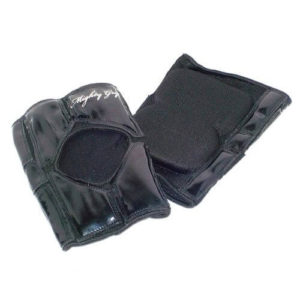
Best for: Knee slides and kneeling floorwork
Knee Pads
A pair of slim knee pads takes the sting out of kneeling, sliding and spinning on your knees. They make it easier to practice floorwork for longer without bruising.
- Cushions kneecaps on hard floors
- Helps knee slides glide
- Need regular washing, as they get sweaty
Add leg warmers. They keep your calves and knees warm, give a little extra padding and help your legs slide across the floor. They look great too. We’ve rounded up the best leg warmers for pole dancing if you need a pair.

Roll through soft tissue, not bone. In rolls, let the flesh of your hips, glutes and the side of your back take the contact instead of your hip bones or spine. Moving slowly gives you time to place yourself well.
Stop if it hurts. Bruises are part of pole, but sharp pain, swelling or pain that stays after class needs looking at. See a doctor or physical therapist rather than training through it.
The best floor and footwear for floorwork
Your floor matters more than you’d think. Wood, laminate and vinyl are ideal because they’re smooth enough to slide on and firm enough to push against. Carpet is the worst choice. It grabs your knee pads and skin, stops slides dead and can leave you with carpet burn. Tile works for slides but is hard and cold, so pad up well. If carpet is all you have, a smooth exercise mat laid on top is a reasonable compromise for practicing the moves that don’t need sliding.
Your footwear changes everything as well:
- Socks make slides and turns smooth on a wooden floor, but they’re slippery when you stand up. Take them off before you go back to the pole.
- Bare feet give you the most grip and feedback. Slides are harder, but bare feet are great for learning shapes and pointing your toes.
- Heels are standard in exotic classes. The weight of a platform shoe adds drama to kicks and leg sweeps and makes your legs look endless. They also change your balance, so learn moves barefoot first. Our tips for pole dancing in heels will help you make the switch.

Musicality: why slower is sexier
The most common beginner floorwork habit is rushing. You know the next move, so you hurry to get there, and the whole thing ends up looking like a workout video on fast forward. Floorwork lives in the pauses.
Try taking each move over twice as many counts as you think it needs. Finish every shape completely, hold it for a beat and only then move on. Let your eyes, head and hands follow through after the main movement is done. Choose music with a slow, steady beat while you’re learning, because it’s easier to hear where the counts fall. Our playlist of slow, sensual songs for pole routines is a good place to start.
If it feels too slow, it’s probably about right.
How to practice floorwork at home
Floorwork is perfect for home training because you don’t strictly need a pole. A clear strip of smooth floor about the length of your body, plus room to roll to either side, is enough to start. If you do have a pole, practice coming down to the floor from it and getting back up, since those transitions are where most routines get messy.
A simple session might look like this: ten minutes of warm-up, a few repetitions of two or three moves on each side, then one short combo set to music. Film the combo on your phone. It’s the quickest way to spot where you’re rushing or where a transition looks clunky. Our guide to learning pole dancing at home has more on setting up your space.
If you prefer following a teacher, a floorwork DVD or online class gives you combos to copy and a sense of how the moves link together.

Best for: Learning floorwork combos at home
Alethea Austin Floorwork DVD
Alethea Austin breaks floor moves down one at a time and then shows how they fit together in routines. It's an older DVD, but floorwork basics haven't changed much.
- Moves taught individually before being combined
- Shows complete example routines
- A few moves are tricky to follow, so expect to pause and rewind
Pro tip
Practice every move on both sides. Most of us have a side that feels natural and a side that feels like someone else’s body, and routines look far more polished when you can travel in either direction.
Frequently asked questions
Do I need a pole to do floorwork?
No. Every move in this guide can be done without one. A pole helps when you start practicing transitions between the floor and standing moves, but you can build a full floor combo in your living room.
Do I really need knee pads?
For anything involving kneeling or sliding, yes. You can get away without them for seated and lying moves, but your knees will thank you for wearing them for the whole session. Folded towels work in a pinch while you wait for a pair to arrive.
What should I wear for floorwork?
Shorts or leggings both work for floorwork alone, though shorts are better if you’ll be using the pole in the same session. Add knee pads, leg warmers if you like them, and a top that won’t ride up over your face when you roll. Tie long hair back until you’re ready to add hair flicks.
Can I do floorwork in heels as a beginner?
Yes, but learn each move barefoot first. Once you know the shape, practicing in heels helps you get used to the extra weight on your feet. Start with a lower platform and work up from there.
Why do my hips bruise after floorwork?
Usually because you’re landing on the bony part of your hip during rolls. Slow down, roll through the fleshier parts of your hips and glutes, and work on a smooth floor with some give. A few light bruises are common when you start. If they’re severe or keep appearing without much contact, check in with your doctor.
Your first floorwork session
Clear some floor, pull on your knee pads and put on one slow song you love. Warm up, then practice the floor roll and the body wave until you can link them without stopping. That’s a combo. Next week, add a fan kick or a knee slide. In a month you’ll have a short routine that’s all yours, and you won’t have left the ground once.
Sources
- Ally Cat, “A Brief and Sparkly History of Pole Dance (Especially the Aussie Bit)”, The Pole Physio blog (undated). thepolephysio.com ↩︎
- Studio Veena, Floor Work lesson curriculum (Knee Slides, Beginner Level 2). studioveena.com ↩︎
Want more articles like this?
Join our mailing list to be the first to know about the latest pole dancing news and products.
We only include the best content in our newsletter, which includes marketing material. Privacy Policy
NO SPAM – EVER. YOU CAN UNSUBSCRIBE AT ANY TIME.