
Your instructor says “outside leg hang, then slide into a Jasmine” and half the class nods while you quietly wonder which leg is the outside one. This glossary of pole dance move names is here to fix that. It covers the terms you’ll hear in class, the grips, the spins, the climbs and sits, and the inverts, from your first tuck to an Iron X.
Each entry is short: what the move or term means and roughly what it looks like. It isn’t a set of tutorials. Inverts and advanced tricks need a qualified instructor and a crash mat, and no written description replaces that.
You will learn:
- Why the same move can have three different names depending on your studio
- The everyday pole dancing terms, from “static” to “pole kisses”
- The main grips: split, cup, twisted, elbow and more
- Beginner spins, climbs and sits
- Invert names from the basic invert up to the Ayesha, Iron X and Rainbow Marchenko
Why pole dance move names vary between studios
Pole doesn’t have one official dictionary that every studio follows. Many moves were named by whoever first taught or filmed them, and the names spread through classes, workshops and YouTube at different speeds in different countries. So the same shape can have several names, and the same name can mean two different shapes.
The classic example is Gemini and Scorpio. Both are leg hangs where you hang from the back of one knee. Some studios call the outside leg hang a Gemini and the inside leg hang a Scorpio, others swap them, and some use one name for both.1 Even careful sources disagree: The Pole Physio, for example, lists the outside leg hang as “aka Gemini” and tags the inside leg hang as a Scorpio.2
Competition rules sidestep the problem by describing positions instead of relying on nicknames. The International Pole Sports Federation (IPSF) Code of Points for 2021 to 2024 lists more than 300 graded elements for solo athletes, sorted into flexibility, strength and spin categories, and many have plain descriptive names like “Inside Leg Hang 1” or “Outside Knee Hook.”3 Plenty of the nicknames survive too, which is why you’ll find a Cupid, a Brass Monkey and a Rainbow Marchenko in there.
Pro tip
If you change studios or follow an online tutorial, don’t argue about the name. Ask “which leg is hooked, and where are my hands?” Those two answers tell you more than any nickname.
Pole dancing terms you’ll hear in class
These are the words instructors use between the moves. Learn these first and the rest of the glossary gets much easier.
Static pole. A pole that doesn’t rotate, so every bit of momentum comes from you. Most beginner classes start on static.
Spin pole (spinning pole). A pole that turns on bearings, so it rotates with you once you’re on it. Many home poles switch between static and spin modes. Competitions use both: under the IPSF rules, athletes perform on one spinning and one static pole, both 45mm brass.3 If you’re new to spin mode, read our tips for pole dancing with a spinning pole.
Inside and outside. Inside means the side of your body closest to the pole, and outside is the side farther away. So your inside leg is the one nearest the pole and your outside arm is the one farther from it. Once you’re upside down this gets confusing, which is why teachers often switch to “top hand” and “bottom hand” instead.
Strong side and weak side. Most people have a side they spin and invert on more comfortably. Instructors will usually ask you to train both, because one-sided training leaves you lopsided in strength and flexibility.
Climb. Any way of getting yourself higher up the pole. On its own, it usually means the basic climb (see below).
Invert. Going upside down. The IPSF defines an inverted position as one where your hips are higher than your shoulders and your shoulders are level with or higher than your head.3 “Your first invert” usually means a basic invert from the floor. If you’re wondering whether you’re ready, see When Can I Do a Pole Invert?
Aerial. Anything done with no part of you touching the floor. An “aerial invert” starts from a climb or a spin instead of with your feet on the ground, and it’s much harder than the floor version.
Hold (trick, pose, shape). A position you stay in for a moment, like a pole sit or an Ayesha. In competition, a compulsory hold must be fixed for two seconds, and a spin’s final position must be held for a full 360° rotation on a static pole or 720° on a spinning pole.3
Transition. The movement that takes you from one hold to the next. Good transitions are where pole starts to look like dancing instead of a list of tricks.
Combo. Short for combination: two or more moves linked together with transitions, such as a climb into a pole sit into a crucifix.
Flow. Moving continuously around and on the pole, often with spins and floorwork, without stopping to set up big tricks. Many studios run whole classes on it.
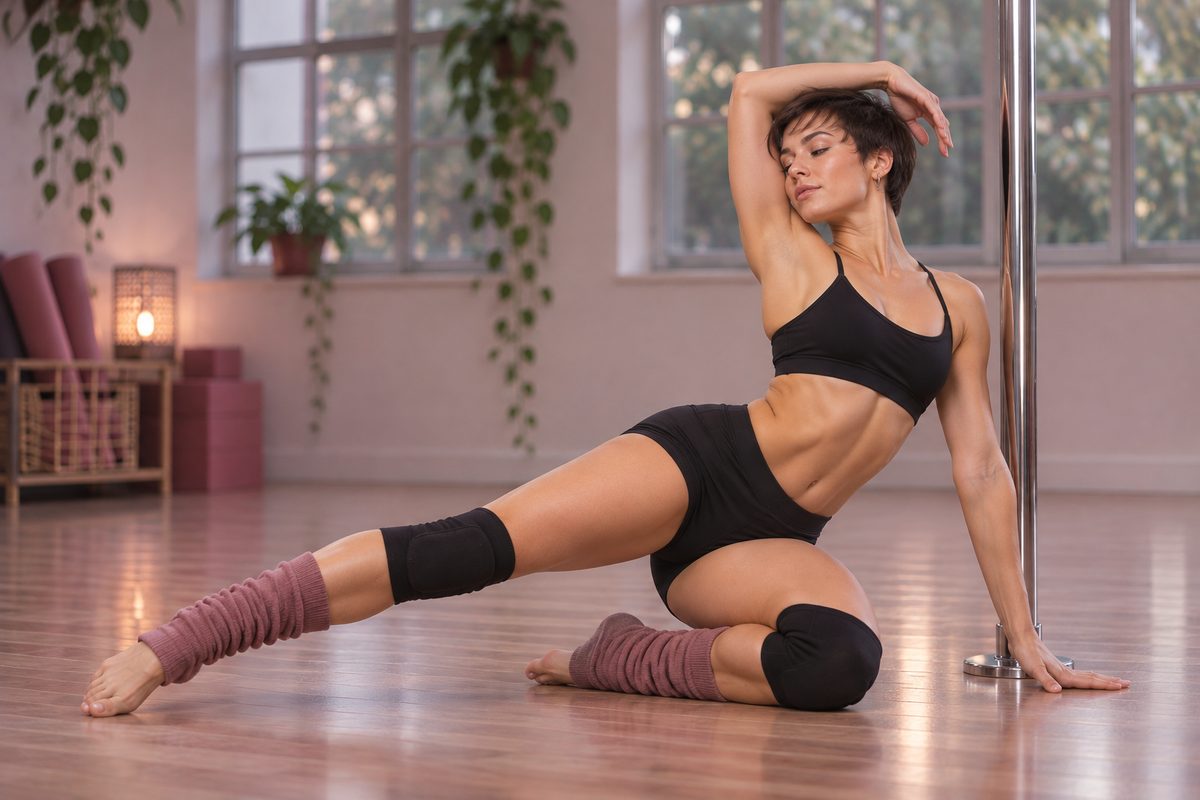
Floorwork. Dance done on the floor, away from the pole: rolls, slides, leg waves and so on. Knee pads come in handy here, and our guide to pole floorwork for beginners has moves to start with.
Dead lift (deadlift). Lifting into an invert using strength alone, with no jump, kick or swing. The IPSF definition says your feet start on the floor, the pole mustn’t be used to help, and you must finish fully inverted. An “aerial dead lift” is the same idea starting from the air.3 When someone says “deadlift Ayesha,” they mean no kicking.
Pole kisses. Pole slang for the bruises you collect while learning. They tend to show up on the inner knees, shins, thighs and the backs of the knees, and they usually fade as your skin and technique adjust. Our guide to caring for pole dancing bruises covers what’s normal and what isn’t.
Pole burn. The friction burn you get when skin slides down the pole, often on the inner thighs or the backs of the knees. It stings, then leaves a red, sore patch for a few days.
Skin grip. Pole relies on bare skin sticking to metal, which is why pole wear is mostly shorts and crop tops. Legs, inner arms and the sides of your waist all do gripping work.
Grip aid. A product that helps your hands or skin stick to the pole, such as a liquid chalk for sweaty hands or a tacky gel for dry skin. We’ve tested a lot of them in all the pole dancing grip aids ranked and compared.
Spotting. When an instructor physically supports you while you try a new move, usually an invert. A good spotter keeps a hand on your hips or back so you can learn the shape without falling out of it.
Crash mat. A thick padded mat that sits around the base of the pole to soften falls. You want one under you for every invert and aerial move, at home as well as in the studio.
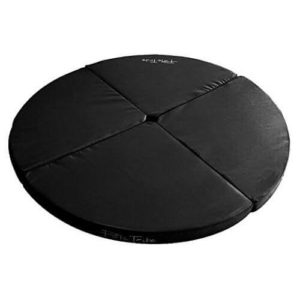
Best for: Practicing inverts and aerial moves at home
Pole Tribe Crash Mat
A round, folding mat made to sit around the base of a dance pole. If you're working on inverts at home, a mat like this is the minimum.
- Center hole fits around the base of the pole
- Folds into sections for storage
- Takes up floor space when it's open
- It cushions a fall, but it doesn't replace an instructor
Pole grip names
“Grip” in pole means how your hands and arms hold the pole. The same move can be done in several grips, so you’ll hear things like “split grip Ayesha” or “elbow grip Ayesha.”
Basic grip (stacked grip, baseball grip). Both hands wrapped around the pole, one above the other, a bit like holding a baseball bat. It’s the grip for your first spins and your first floor invert.
Split grip. Your hands are spread apart on the pole, one high and one low, with the top hand pulling the pole toward you and the bottom hand pushing it away. That push and pull holds your body out to the side. Split grip shows up in spins, the butterfly and the Iron X.
Cup grip. The thumb sits on the same side of the pole as your fingers, so your hand cups the pole instead of wrapping around it.3 It’s common for the top hand in shoulder mounts and handsprings, and it asks a lot of your arm strength.
True grip (straight grip). This is the grip name with the most local meanings. On this blog, true grip means the regular, untwisted grip used for handsprings. Some teachers use it as another name for cup grip, and The Pole Physio uses “straight grip” for a version where the top palm turns up.4 Ask your teacher which one they mean.
Twisted grip. The top hand rotates around to grab the pole from the far side, which turns the shoulder inward. Many dancers feel secure in it, but it puts the shoulder in a demanding position, so most instructors teach it carefully and after plenty of shoulder conditioning. Our article on the truth about twisted grip explains why.
Elbow grip. The pole sits in the crook of one elbow, with the other hand gripping lower down. It takes some pressure off the hands and is a popular way to learn an Ayesha. Expect the inside of your elbow to bruise at first.

Flag grip. The grip behind the Brass Monkey and several flag-family moves, where your arms work as a lever to hold your body out to one side of the pole. Studios set the hands up a little differently, so let your instructor show you the version they teach.
Forearm grip. One hand and forearm press along the pole while the other hand does its own thing. You’ll meet it in some spins and transitions.
Beginner pole spin names
Spins are usually the first moves you learn. On a static pole, you walk or step around the pole to build momentum and then lift your feet. Our 27 beginner pole moves post has step-by-step help for many of these. Where the IPSF Code of Points defines a spin, the description below follows it.3
Front hook spin. You hold the pole with both hands, step around and hook your inside leg around the pole with the back of the knee, and spin forward. The IPSF version has the legs in a diamond shape (knees apart, toes together).
Back hook spin. The same idea in reverse: inside knee hooked around the pole, but you spin backward, with your back leading. Many beginners find it a little easier than the front hook because the pole stays close beside your body.
Fireman spin. You swing around the pole and catch it with both legs, knees bent, pressing the pole between your lower legs as you turn. In the IPSF version both legs touch the pole at the ankles. It’s a great early lesson in squeezing with your legs.
Chair spin. Both hands hold the pole and your knees lift and bend together in front of you, as if you’re sitting in an invisible chair while you spin. The competition version wants both hips and knees at 90°.
Carousel spin. Your arms stay long on the pole while you lean back slightly and lift your legs off the floor, knees bent and feet reaching back behind you. The longer arms let you swing out wider, so it feels faster and floatier than a chair spin.
Attitude spin. Named after the ballet position, where a lifted leg is bent at the knee. In most versions one leg hooks the pole at the ankle or calf and the other leg is bent up beside it, both knees at roughly right angles. Exactly which leg touches the pole varies by studio.
Cradle spin. You tuck your legs up close to the pole and hold on in split grip, so your body curls sideways around the pole, almost horizontal. It’s often taught as a step toward inverts because it gets you used to lifting your hips.
Pole climbs, sits and hands-free holds
Basic climb. With your hands high, you pull yourself up and grip the pole between the top of one foot and the shin of the other leg, then stand up on that grip, move your hands higher and repeat. Expect shin bruises in the first few weeks.
Pole sit. Sitting on the pole with it gripped high between your thighs, usually with one leg crossed over the other, so you can let go with your hands. It’s the first “look, no hands” moment for most people, and the inner thighs pay for it.

Crucifix. An upright hold where your legs grip the pole and you open your arms out to the sides, like a T. Some studios teach it leaning back from a pole sit. It’s a good test of how well your thighs grip.
Layback. From a sit or a climb, you lean back so you’re hanging backward and partly upside down, held by your inner thighs alone, with no hands. The IPSF version has your chest lower than your hips and legs.3 It feels terrifying the first time and wonderful by the tenth.
Cupid. Your inside leg hooks the pole at the knee and your outside leg stretches out straight with the sole of the foot pressed against the pole, so your body leans diagonally away from the pole. The competition version is completely hands-free, but many dancers learn it holding the pole or reaching overhead.5
Pole invert names: from first inverts to leg hangs
Learn these with a qualified instructor, a spotter and a crash mat. Most instructors want to see a controlled invert from the floor before they’ll let you try anything that starts in the air.
Basic invert (straddle invert, inverted V). Standing with both hands on the pole, you tuck your knees to your chest, lift your hips and tip upside down, then open your legs into a V on either side of the pole, ready to hook them on. Our step-by-step guide to how to invert on a pole breaks it down. Most of the work happens in your core and arms, not your legs.
Inverted crucifix (cross ankle release). From a basic invert, you hook your legs around the pole and cross your ankles, squeeze, then let go with your hands and lean back so you’re hanging upside down, held by your legs. It’s usually the first hands-free invert people learn.
Crossknee release (cross knee release). Similar to the inverted crucifix, but your legs cross higher, so the pole is gripped behind one knee and against the other leg. It’s more secure once you have it, and lots of moves start from it, including the Brass Monkey and the Ayesha.6
Outside leg hang. Upside down, you hang from the back of your outside knee, hooked around the pole, with the inside leg extended. Your waist and the back of your shoulder also press on the pole for extra grip.7 Often called a Gemini (or a Scorpio, depending on the studio).
Inside leg hang. The same hang, but from the back of your inside knee. Often called a Scorpio (or a Gemini). A flatline is a version where your body stays parallel to the floor instead of hanging down.8
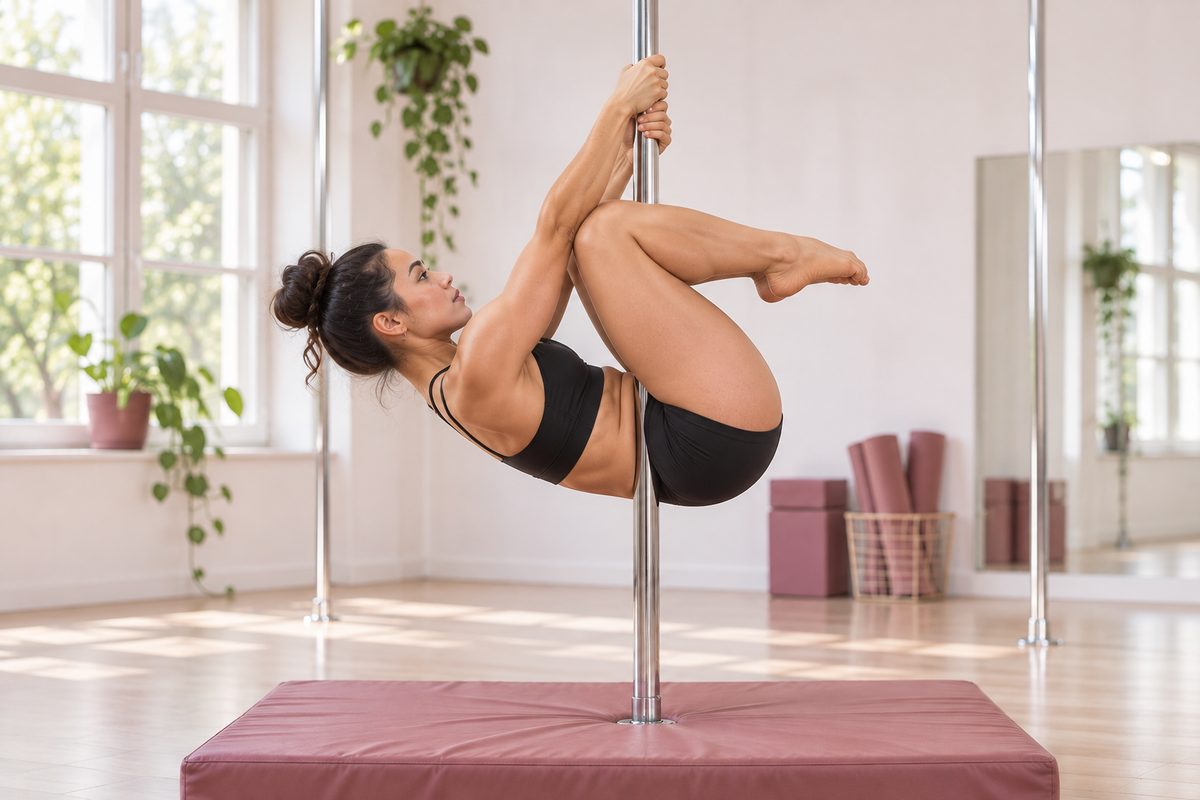
Jasmine. With one leg hooked over the pole at the knee, you lean forward under control and lift your bottom leg so the pole is caught in that hip crease.9 Many dancers also tuck that foot behind the hooked knee for extra security. It’s a secure, pretty shape that lots of dancers use as a resting point in combos.
Superman. A horizontal, face-down hold. The pole is gripped between your inner thighs and one hand holds the pole high above you, while your legs extend together behind and your hips face the floor, like a cartoon hero mid-flight.3 We have 5 ways to get into the Superman pose if you want to try it.
Brass Monkey. An inverted shape where your inside leg hooks the pole at the knee and back of the thigh and your arms hold the pole in flag grip, with your body hanging to one side of the pole.3 There are many entries, including from a shoulder mount or a crossknee release.
Advanced pole trick names
These moves put serious load on your shoulders, wrists and core. Build up to them over months, with conditioning and an instructor who knows you.
Shoulder mount. The pole rests on the top of your shoulder (your upper trapezius) while your hands grip above and below, and you lift your legs up and over into an inverted position. It’s usually the first move that introduces cup grip.10 Our shoulder mount conditioning tips will help you build the strength for it.
Butterfly. Often the first inverted move in split grip. You hang upside down from your hands, with one leg hooked onto the pole and the other leg reaching away behind you.11
Extended butterfly. A butterfly with both legs straight in a split, one heel or ankle touching the pole, which moves your weight farther from the pole and makes it much harder for your arms. It’s a common stepping stone to the Ayesha.
Ayesha. Upside down, held up by your arms alone, legs open in a V. The Pole Physio describes it as an uneven handstand: your bottom arm pushes while your top arm pulls.4 You’ll see split grip, cup grip, twisted grip and elbow grip versions.
Handspring. The movement you use to get into an Ayesha, kicking or lifting up from the floor (or from the air) until you’re inverted. Plenty of studios use “handspring” for the end shape too, which is technically the Ayesha.12 A deadlift handspring means getting there with no kick.
Iron X. A strength hold, usually in split grip, where your body sticks straight out sideways from the pole, ideally at 90°, with your legs in a wide straddle so you make an X. An Iron K is an easier variation with your feet closer to the pole.13
Flag (human flag). Like an Iron X but with your legs together, which lengthens the lever and makes it harder still.13 It’s the move that makes non-pole people stop scrolling.

Allegra. A backbending split hold that starts from a deep inside leg hook. In the closed Allegra, your outside arm reaches behind the pole to hold your foot, so your body forms a curved line. It takes its name from Allegra, an Australian dancer who made it famous in competition around 2010.14
Rainbow Marchenko. An advanced back-bend shape. In the competition versions, you hold the pole in flag grip with your inside arm while your outside arm reaches back to hold your inside leg at the ankle or shin, chest facing down, so your body curves like a rainbow.3 It needs a deep backbend and a comfortable split long before you try it on the pole.
Phoenix spin. A reverse spin that starts with one hand on the pole and turns into a twisted grip handspring without your feet touching the floor, ending upside down.3 You need a solid twisted grip handspring before you try it.
Deadlift versions. You’ll see “deadlift” in front of lots of advanced names: deadlift shoulder mount, deadlift Ayesha, deadlift straddle. It always means the same thing: no kick, no jump, all control.
Names change from studio to studio. Where your hands and legs go doesn’t.
Frequently asked questions
How many pole moves are there?
Nobody has a definitive count, because dancers keep inventing new shapes and combinations. For a sense of scale, the IPSF Code of Points for 2021 to 2024 grades more than 300 separate elements for solo athletes, and that’s before you count transitions, floorwork and variations.3
What pole moves should beginners learn first?
Most studios start with walks, basic spins (front hook, back hook, fireman, chair), the basic climb and the pole sit. Inverts come once you have the strength and control to tuck and lift safely. Our list of beginner pole moves is a good place to start.
Is a Gemini an inside or outside leg hang?
It depends who you ask. Both conventions are common, so use whichever your studio uses and check which leg is hooked when you follow a tutorial from somewhere else.
Where to go from here
Bookmark this page for the next time a new name turns up in class. If a word isn’t here, ask your instructor to demo the shape slowly and jot down which leg hooks and where your hands go, so you can find it again in tutorials. And if you’re still at the spins-and-sits stage, there’s no rush: the Ayesha will wait for you.
Sources
- Holly Munson, “Gemini Plank or Flatlined Scorpio… What’s The Difference?”, Pole Freaks. polefreaks.com ↩︎
- Simone Muscat, “Outside Leg Hang (aka Gemini)”, The Pole Physio, 2023, thepolephysio.com; and “Anatomy of an Inside Leg Hang and Flatline”, The Pole Physio, thepolephysio.com ↩︎
- International Pole Sports Federation (IPSF), Pole Sports Championships Code of Points 2021–2024 (flexibility elements F1–F122, strength elements S1–S107, spins ST1–ST29 and SP1–SP72), 2021. PDF hosted by the American Pole League ↩︎
- Simone Muscat, “Anatomy of an Ayesha”, The Pole Physio, 2020 (updated 2025). thepolephysio.com ↩︎
- IPSF, Pole Sports Championships Code of Points 2021–2024, strength element S12 “Cupid”, 2021, PDF hosted by the American Pole League; and Simone Muscat, “Anatomy of a Cupid, Genie and Knee Hold in Pole Dance”, The Pole Physio, 2024, thepolephysio.com ↩︎
- Holly Munson, “12 Pole Moves from a Cross Knee Release”, Pole Freaks. polefreaks.com ↩︎
- Simone Muscat, “Outside Leg Hang (aka Gemini)”, The Pole Physio, 2023. thepolephysio.com ↩︎
- Simone Muscat, “Anatomy of an Inside Leg Hang and Flatline”, The Pole Physio. thepolephysio.com ↩︎
- Kheanna, “PJ Trick Challenge: Marley” (Jasmine entry), Pole Junkie, May 2022. polejunkie.com ↩︎
- Simone Muscat, “Anatomy of a Shoulder Mount”, The Pole Physio, 2021 (updated 2023). thepolephysio.com ↩︎
- Simone Muscat, “Anatomy of a Butterfly”, The Pole Physio, 2025. thepolephysio.com ↩︎
- Simone Muscat, “Anatomy of a Handspring and Deadlift”, The Pole Physio, 2021 (updated 2026). thepolephysio.com ↩︎
- Simone Muscat, “Anatomy of an Iron X & Human Flag”, The Pole Physio, 2021 (updated 2023). thepolephysio.com ↩︎
- Simone Muscat, “Anatomy of an Allegra”, The Pole Physio, 2025. thepolephysio.com ↩︎
Want more articles like this?
Join our mailing list to be the first to know about the latest pole dancing news and products.
We only include the best content in our newsletter, which includes marketing material. Privacy Policy
NO SPAM – EVER. YOU CAN UNSUBSCRIBE AT ANY TIME.