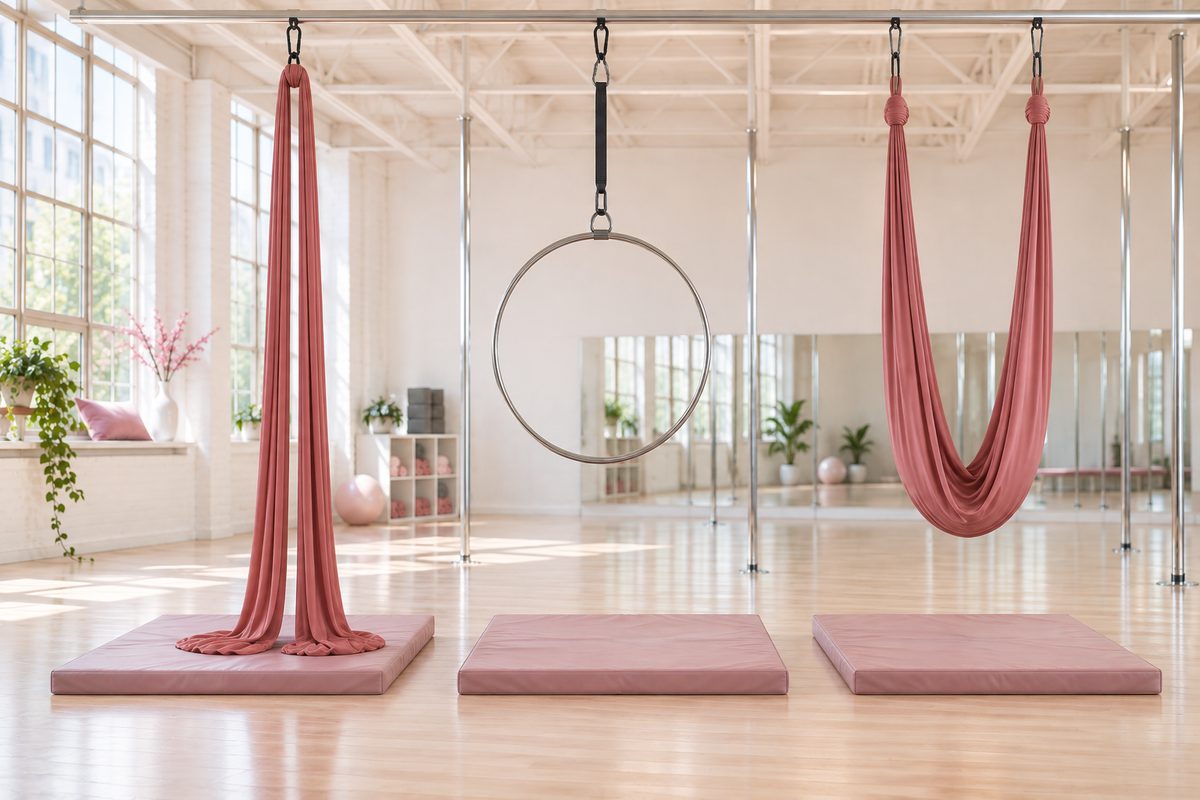

Aerial silks vs lyra is the first puzzle most people hit when they decide to try aerial, and then someone mentions the aerial hammock and it gets harder. Each one hangs from the ceiling and gets you upside down eventually. They also feel completely different on your body, from where you bruise to how strong you need to be on day one, and one of them is probably a better first step for you than the others.
Here’s how the three compare, what a beginner class on each actually involves, how they relate to pole and what’s realistic if you want to train at home.
You will learn:
- What aerial silks, lyra and the aerial hammock are, and how each one feels
- Where each apparatus is hardest on your body
- A side-by-side comparison of strength, pain, flexibility, cost and home options
- How each one fits with pole dancing
- Which aerial class to take first
- The truth about rigging aerial equipment at home
Silks, lyra and hammock at a glance
If you only read one part of this post, make it this table. It compares the three as a beginner would experience them in a studio class.
| Aerial silks | Lyra (aerial hoop) | Aerial hammock | |
|---|---|---|---|
| Beginner friendliness | Moderate. Climbing takes weeks to feel comfortable. | Moderate. You can sit in a low hoop and pose early on. | High. Starts low and fully supported. |
| Strength needed | High. Grip, arms and back do the climbing. | Moderate to high. Getting into the hoop takes pulling and core strength. | Low to start, building gradually. |
| Pain and bruising | Fabric burns, plus bruises on the feet, hips and inner arms. | The most. Steel presses into the backs of the knees, hips and armpits. | The least, though hip pressure in inversions takes getting used to. |
| Flexibility | Helpful for splits and some wraps, not needed to start. | Helpful for shapes and lines, not needed to start. | Not needed. Stretching is built into most classes. |
| Cost | Class prices are usually similar at the same studio. Home setups need rated hardware and a safe point. | As silks, but a hoop must be sized to you, so buying your own costs more. | Often the cheapest to buy, but it still needs a rated point or frame. |
| At-home options | Freestanding frame (low work only) or a professionally rigged point. | Freestanding frame or a professionally rigged point. | Freestanding frame or a professionally rigged point. Suits low frames well. |
What are aerial silks?
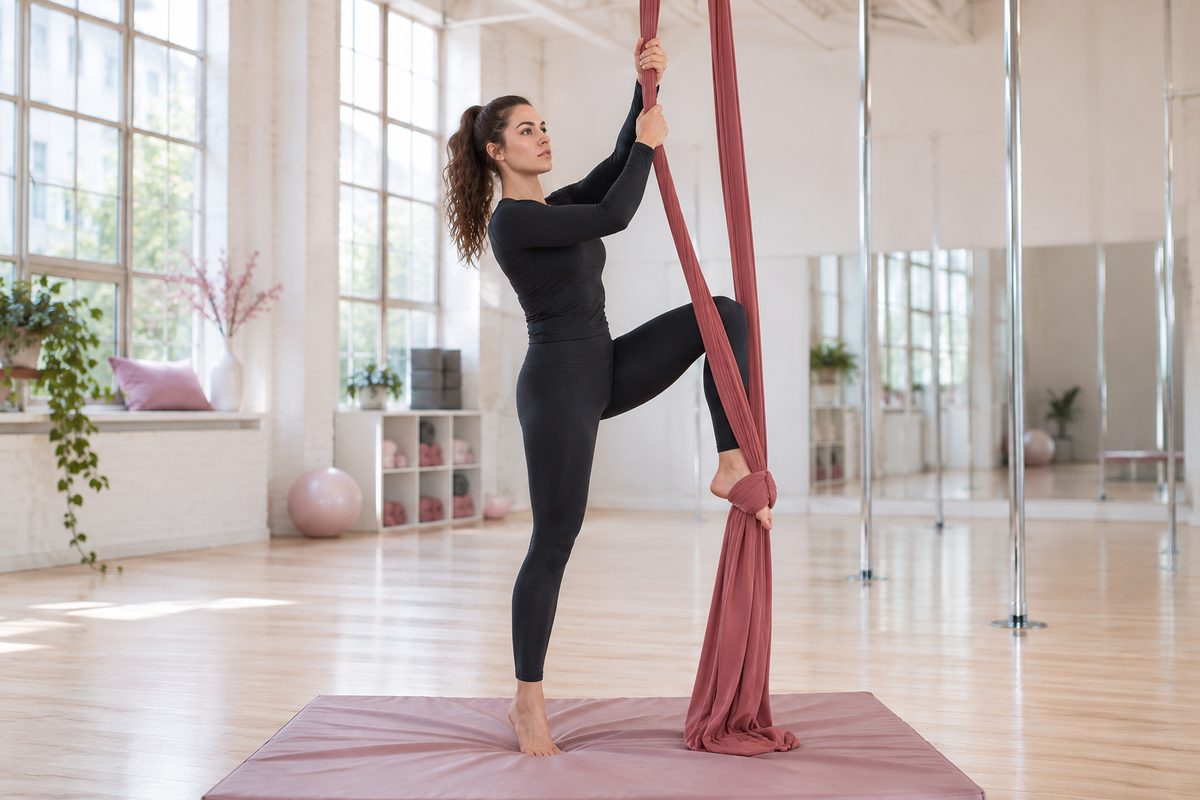
Aerial silks (also called aerial fabric, tissu or ribbons) are two long tails of fabric hanging from a single point. They’re usually nylon or spandex rather than actual silk.1 You climb the fabric, wrap it around your legs and body to hold positions, and later learn drops, where you unroll from a wrap and the fabric catches you. Our guide to aerial silks for beginners walks through a first class in detail.
What it feels like: soft, a bit stretchy and always moving. The fabric swings and twists, so you’re constantly working to stay steady. Hanging in a good wrap feels secure and almost cozy. Getting there is the hard part.
Main beginner skills: grips and active hangs, the foot lock, a basic climb, simple sits and wraps low to the ground, then inverts once you can tuck with control.
Where it’s hard on the body: climbing. Silks ask a lot of your grip, forearms, shoulders and lats from the very first class, and you’ll feel it the next day. The fabric also leaves friction burns on bare skin, which is why silks students wear full-length leggings and tops that cover the armpits.

What is lyra (aerial hoop)?
Lyra is a steel hoop hung from the ceiling. It’s also known as the aerial hoop, aerial ring or cerceau, and it can be rigged from one point or two.2 You pull yourself into the hoop, then sit, hang, stand and pose in and around it, often while it spins. We cover the basics in more depth in Lyra Dance: Everything You Need To Know.
What it feels like: solid and metallic, much closer to pole than silks or hammock. The hoop doesn’t stretch, so your shapes look crisp, and once you’re sitting in it you can rest in a way you can’t on silks.
Main beginner skills: mounting the hoop from the floor, a basic sit on the bottom bar, simple poses such as the mermaid and the man in the moon, hangs from the knees and slow controlled spins.
Where it’s hard on the body: pressure points. A narrow steel bar presses into the backs of your knees, your hip bones, the tops of your thighs and your armpits, and beginners usually leave lyra class with a fresh set of bruises. Hoops are also sized to the person. One common method is to sit on a chair, measure from the seat to the top of your head and add about 4 inches, which gives an outside diameter.3 A hoop that’s too small makes everything more painful, so check sizing before you buy one. Our guide to the best aerial hoops for home use goes into the details.

What is an aerial hammock?
An aerial hammock is a loop of soft fabric hung from two points so it forms a sling, usually close to the floor. It’s best known from aerial yoga. Dancer and yoga teacher Michelle Dortignac was teaching weekly aerial yoga classes in Brooklyn from January 2006,4 and AntiGravity Fitness, founded by Christopher Harrison in 2007, helped popularize hammock-based classes.5 Aerial dance classes also use a hammock (sometimes called a sling) hung higher, which looks and trains more like silks.
What it feels like: supported. The hammock takes most of your weight, so you can try your first inversion with the fabric cradling your hips and your hands on the floor. Many people find hanging upside down in a hammock surprisingly relaxing.
Main beginner skills: sitting and lying in the hammock, supported backbends, simple inversions with the fabric at the hips, assisted stretches and gentle swings.
Where it’s hard on the body: it’s the gentlest of the three, but not effortless. The fabric presses into your hip creases during inversions, which can feel intense at first, and a few minutes upside down can leave you light-headed. If you have a health condition that could make inverting a concern, check with your doctor before you book.

Aerial silks vs lyra: the main differences
Silks and lyra are the two people weigh up most often, so they deserve a closer look. The biggest difference is how you get going. On silks, almost everything starts with climbing or at least hanging your full weight, so progress depends heavily on upper-body strength. On lyra, a low hoop lets you sit and pose early, and you’ll feel like you’re “doing aerial” sooner, even if mounting the hoop cleanly takes a while.
Pain is the other big one. Lyra hurts in sharp, specific places because the bar is narrow and hard. Silks hurt in a more spread-out way, with burns where the fabric slides and bruises where wraps squeeze. Neither is gentle on the shoulders. In a 2023 study of preprofessional and professional circus artists in the US, aerial disciplines had higher injury rates than ground acrobatics, and the shoulder was the most commonly injured area.6 That’s a professional group, not weekend students, but it’s a good reason to build strength steadily on either apparatus and to train with a qualified instructor and a crash mat.
Then there’s the feel. Silks are soft and fluid, and wraps let you tie yourself into shapes. Lyra is structured and spinny, with lines that read clearly from across a room. Neither is objectively harder; they’re hard in different ways.
How each one relates to pole
Lyra is the natural next step for most pole dancers. It’s metal, it spins, you grip with bare skin, and many pole studios teach it. Your knee hangs and poses carry over, and so does your bruise tolerance.
Silks are more of a cross-training partner. You’ll be covered up instead of relying on skin grip, but the pulling strength you build climbing fabric makes pole climbs and holds feel noticeably easier.
The aerial hammock is a lovely complement on lighter days. It’s good for flexibility and for getting comfortable upside down without much load on your hands. We’ve written about this in how aerial yoga and pole fitness progress complement each other. For a wider look at other apparatus, from static trapeze to flying pole, see 7 unique aerial sports to try.
Which aerial class should you take first?
There’s no wrong answer, but some starting points suit some people better.
- Try the aerial hammock first if you’re new to exercise, nervous about height, coming back after a break or mainly after flexibility. It’s the gentlest way to find out whether you like being upside down.
- Try lyra first if you already pole, love shapes and posing, and can live with bruises. The skills will feel familiar.
- Try silks first if you love a strength challenge, enjoy climbing, or have always wanted to do the dramatic drops you’ve seen in shows. Expect a slower start and a bigger payoff.
Pro tip
Still torn? Look for an intro or mixed-apparatus aerial class. Lots of studios run taster sessions that rotate through two or three apparatus, and one hour on each will tell you more than any comparison table.
Can you do aerial at home?
Yes, eventually, but home aerial is a different proposition from a home pole. A pole pushes against your floor and ceiling. An aerial apparatus hangs your whole body weight, plus the extra force of every beat and swing, from one or two points overhead. Moving on an apparatus multiplies the load on it, and you usually can’t tell by eye whether a beam can take that.7
That leaves two safe routes:
- Ceiling rigging, done by a professional. A qualified rigger or structural engineer assesses your structure and installs a rated point with aerial-rated hardware. Don’t screw a hook into a ceiling joist yourself and hope for the best.
- A freestanding aerial frame. No drilling, and you can take it down. The tradeoff is height: frames are much lower than a studio ceiling and take up a lot of floor space. They suit hammock and lyra work well, while silks on a frame are limited to low skills and conditioning. Our guide to the best freestanding aerial rigs compares the options.
Whichever route you choose, put a proper crash mat underneath and only practice skills you’ve already learned in class. Our page on aerial fitness equipment rounds up our gear reviews, and our crash mat guide explains what to look for in a mat.
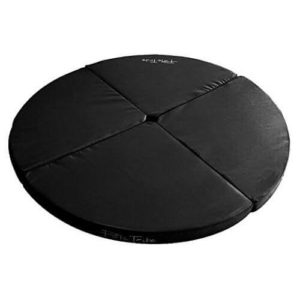
Best for: Padding under a home aerial frame or rigging point
Pole Tribe Crash Mat
A folding round crash mat that gives you a softer landing zone under your apparatus. It adds protection but doesn't replace an instructor or proper rigging.
- Folds away for storage
- Round shape suits training under a single hanging point
- Takes up floor space when open
- Not a substitute for learning new skills in class
Frequently asked questions
Is lyra harder than silks?
Not exactly. Silks usually feel harder at the start because climbing takes so much grip and upper-body strength. Lyra lets you sit and pose sooner but hurts more, and it needs strong pulling and core work to mount cleanly.
Is aerial yoga easier than aerial silks?
For most beginners, yes. The hammock hangs low and supports your weight, so you can invert without climbing or holding yourself up. Silks expect you to support your own weight from the first class.
Which aerial apparatus is best for beginners?
The aerial hammock is the most forgiving starting point. If you already pole, lyra will probably feel most familiar. Silks suit people who enjoy a strength challenge and don’t mind a slower start.
Does lyra hurt more than pole?
Many dancers find it does at first, because the hoop is narrower than a pole and presses into the backs of the knees and the hips. It eases as your skin and technique adapt. For looking after bruises, see our guide to caring for pole dancing bruises and injuries, and see a doctor or physical therapist for any pain that’s sharp or doesn’t settle.
Do I need to be flexible to try aerial?
No. Flexibility helps with splits and some shapes later on, but none of the three needs it for a beginner class. Aerial hammock classes in particular include plenty of stretching.
What should I wear to an aerial class?
Full-length leggings that cover the backs of your knees and a fitted top that covers your armpits work for all three. Skip zippers and jewelry, and don’t put lotion on before class, because it makes your skin slide on fabric and metal.
Picking your first apparatus
Choose the one that made you want to try aerial in the first place, then book a beginner class at a studio with trained instructors and professionally rigged points. If you can’t decide, start with a hammock or a taster class and see what pulls you back. Plenty of aerialists end up training two or even all three, and each one makes the others easier.
Sources
- Wikipedia, “Aerial silk” (other names and fabric types). en.wikipedia.org/wiki/Aerial_silk ↩︎
- Wikipedia, “Aerial hoop” (other names, steel construction, single- and double-point rigging). en.wikipedia.org/wiki/Aerial_hoop ↩︎
- Firetoys, “What Size Aerial Hoop Do I Need?”, October 2019. firetoys.com ↩︎
- Ami Kealoha, “Aerial Yoga”, Cool Hunting, October 2006. coolhunting.com ↩︎
- Wikipedia, “AntiGravity Fitness”. en.wikipedia.org/wiki/AntiGravity_Fitness ↩︎
- Greenspan S, Stuckey MI. “Untangling risk factors including discipline-specific exposure for injuries in preprofessional and professional circus artists in the USA.” BMJ Open Sport & Exercise Medicine, 2023;9(2):e001551. Read the study ↩︎
- Firetoys, “Safe Home Rigging” (rigging guide for aerialists). firetoys.com ↩︎
Want more articles like this?
Join our mailing list to be the first to know about the latest pole dancing news and products.
We only include the best content in our newsletter, which includes marketing material. Privacy Policy
NO SPAM – EVER. YOU CAN UNSUBSCRIBE AT ANY TIME.